
Your core is more than just your abdominal muscles—it’s the powerhouse that supports every movement you make. When joseph pilates developed his revolutionary exercise system in the early 20th century, he understood that true strength comes from within, radiating outward from what he called the “powerhouse.” Today, millions of people discover that pilates offers a unique approach to building not just stronger abs, but a foundation of stability that transforms their entire body health. Pilates features exercises designed to enhance core strength, improve muscular balance, and promote overall body efficiency.
Unlike traditional crunches that only target surface muscles, these 12 pilates exercises for core strengthening work deep stabilizing muscles that most people never even knew existed. The beauty of these specific exercises lies in their accessibility—you can perform every single movement at home with no equipment needed, making core training both convenient and effective.
Whether you’re dealing with lower back pain, seeking better posture, or simply wanting to build a stronger core, this comprehensive guide will take you through foundational moves to advanced challenges. Each exercise has been carefully selected to target your deep core muscles while promoting whole body health and functional strength.
What is Core Strength and Why Pilates Works
True core strength extends far beyond the rectus abdominis—those six pack abs that get all the attention. Your core encompasses a complex network of muscles including the transverse abdominis (your deepest abdominal layer), the pelvic floor muscles that support your internal organs, the multifidus along your spine, and the diaphragm that powers your breathing.
Joseph pilates understood this interconnected system when he developed his method, referring to the core as the “powerhouse”—the body’s center of strength and stability from which all movement originates. This concept revolutionized how we think about core engagement, shifting focus from superficial muscles to the deeper muscles that provide genuine support and stability.
What makes pilates core exercises uniquely effective is their ability to target these deep stabilizing muscles through precise, controlled movements. Research using electromyographic (EMG) technology shows that Pilates activates the transverse abdominis and pelvic floor significantly more than traditional exercises. This muscle activation happens through slow, deliberate movements that emphasize quality over quantity.
The pilates approach integrates controlled breathing with movement, creating intra-abdominal pressure that naturally supports your spine while strengthening your deeper muscles. This coordination between breath and movement teaches your nervous system to engage your core automatically, leading to improved posture and reduced back pain in daily activities.
Even those new to exercise can benefit from this approach because pilates moves emphasize proper alignment and gradual progression. The controlled nature of each movement allows your body to build strength systematically while developing the neuromuscular patterns that support long-term whole body health.
Understanding the Core and Pelvic Floor
A truly strong core goes beyond just visible abs—it’s about the deep core muscles and the pelvic floor working together to support your entire body. The core includes not only the abdominal muscles you can see, but also the deeper layers like the transverse abdominis and the muscles along your back. These muscles wrap around your trunk like a natural corset, providing stability for every movement you make.
Equally important is the pelvic floor, a group of muscles at the base of your pelvis that supports your internal organs and plays a vital role in posture, continence, and even breathing. In Pilates, special attention is given to engaging both the core and pelvic floor, creating a foundation for all movement and helping to prevent issues like lower back pain and poor posture.
When you practice pilates core exercises, you’re not just working toward a stronger core—you’re also improving your overall body health. A well-conditioned core and pelvic floor can enhance your balance, support your back muscles, and boost your overall fitness. By focusing on these deeper muscles, Pilates helps you move more efficiently, stand taller, and feel more confident in your daily activities. Incorporating these exercises into your routine is a powerful way to build a resilient, healthy body from the inside out.
Benefits of Pilates Core Training
Consistent pilates core exercises deliver benefits that extend far beyond aesthetic improvements. When you develop a strong core through pilates training, you’re investing in your overall fitness and long-term health in ways that impact every aspect of daily living.
Improved Posture and Spinal Alignment Strong core muscles act as a natural corset, supporting your spine’s natural curves and reducing the strain on your back muscles. Regular pilates practice helps counteract the forward head posture and rounded shoulders that plague many desk workers, creating better alignment from your pelvis through your rib cage.
Reduced Lower Back Pain Through Better Core Support Studies show that pilates interventions can reduce chronic lower back pain by 2-3 points on pain scales while improving disability scores by 10-12%. This happens because a stronger core provides better support for your spine, reducing the workload on your back muscles and improving movement patterns that contribute to pain.
Enhanced Balance and Coordination Your core serves as your body’s stability center, and pilates moves challenge this system through controlled, multi-plane movements. As your deep abdominals and pelvic floor strengthen, you’ll notice improved balance in activities ranging from walking on uneven surfaces to playing recreational sports.
Better Breathing Patterns and Diaphragm Function Pilates emphasizes coordinated breathing that strengthens your diaphragm while teaching proper respiratory mechanics. This improved breathing efficiency supports better oxygenation during exercise and daily activities, while also enhancing the connection between your diaphragm and pelvic floor for optimal core function.
Injury Prevention for Daily Activities and Sports A stable core provides a solid foundation for all movement, whether you’re lifting groceries, playing tennis, or chasing after children. Research indicates that people with stronger cores experience fewer injuries because their bodies can better handle unexpected forces and maintain proper movement patterns under stress.
Increased Body Awareness and Mind-Body Connection Pilates core exercises require focused attention on alignment, breathing, and muscle activation. This heightened body awareness carries over into daily life, helping you recognize and correct poor posture habits while moving with greater efficiency and grace.
Essential Pilates Breathing Technique
Before diving into the exercises, mastering the fundamental pilates breathing technique is crucial for maximizing core engagement and safety. This lateral thoracic breathing pattern differs significantly from shallow chest breathing or deep belly breathing that many people use instinctively.
The Lateral Thoracic Breath Begin in tabletop position with your knees bent and feet flat on the floor, or lying comfortably on your back. Place your hands on your lower ribs with your palms facing down and fingers pointing toward each other. As you inhale, focus on expanding your ribs sideways into your hands rather than lifting your chest or pushing your belly out.
This sideways expansion engages your intercostal muscles (the small muscles between your ribs) while maintaining core engagement throughout the breath cycle. Your rib cage should widen like an accordion opening, creating space for your lungs to fill without compromising your abdominal muscles or neutral pelvis position.
The Core-Connected Exhale On your exhale, gently draw your belly button toward your spine while allowing your ribs to naturally draw back together. This isn’t a forceful contraction, but rather a gentle engagement that connects your diaphragm with your deeper abdominal muscles. Think of zipping up a tight pair of jeans—you engage your lower belly first, then progressively activate upward.
Practice Exercise: Breathing in Tabletop Position Lie on your back with knees bent at 90 degrees, shins parallel to the floor. Keep your glutes engaged and maintain a straight line from your knees to your shoulders. Place one hand on your chest and one on your lower ribs. Breathe laterally into your ribs while keeping your core engaged and your pelvis in neutral position.
Practice this breathing pattern for 8-10 breaths before moving into any pilates exercises. This foundation will help you maintain proper core activation throughout your workout while ensuring that you’re breathing efficiently rather than holding your breath during challenging movements.
Neutral Pelvis and Posture
Achieving and maintaining a neutral pelvis is a cornerstone of effective Pilates practice and overall body health. A neutral pelvis means your hip bones and pubic bone are aligned in the same horizontal plane, allowing your spine to maintain its natural curves. This alignment is crucial for optimal core engagement, as it enables the transverse abdominis and other core muscles to activate properly without unnecessary strain on your back.
Good posture starts with a neutral pelvis and extends through your entire body. When your posture is aligned, your muscles work more efficiently, your breathing improves, and your risk of injury decreases. In Pilates, every exercise begins with finding this neutral alignment, ensuring that your core is engaged and your movements are both safe and effective.
By consistently practicing exercises with a focus on neutral pelvis and posture, you’ll notice improvements not only in your core strength but also in your overall physical performance. You’ll move with greater ease, experience less discomfort, and support your long-term body health. Remember, the foundation of a strong core is built on proper alignment—so take the time to set up correctly before every exercise.
12 Core-Strengthening Pilates Exercises
Foundational Exercises
These four beginner-friendly exercises establish the movement patterns and core connection essential for all pilates work. Focus on quality over quantity, performing each movement with precise control and proper breathing.
The Hundred – Classic Pilates Core Exercise
Starting position: Lie on your back with knees bent in tabletop position, shins parallel to the floor. Lift your head and shoulders slightly off the mat, reaching your arms long by your sides just above the mat.
Execution: Pump your arms up and down in small, controlled movements about a few inches in range. Breathe in for 5 pumps, then exhale for 5 pumps. Keep your core engaged throughout, preventing your lower back from arching.
Beginner modification: Keep your feet flat on the floor instead of lifted, or place your head down if neck strain occurs.
Progression: Extend your legs straight at a 45-degree angle, or lower your extended leg closer to the floor to increase the challenge.
Single Leg Toe Taps – Controlled Lowering
Starting position: Begin in tabletop position with both knees bent at 90 degrees, core engaged, and neutral spine maintained.
Execution: Slowly lower your right leg until your toe lightly taps the floor, then return to starting position with control. The movement should come from your hip while your abdominal muscles work to prevent your back from arching. This exercise specifically targets the lower abs by engaging the lower portion of the rectus abdominis and transverse abdominis. Switch legs after completing all repetitions on one side.
Focus points: Keep your pelvis stable and avoid shifting weight from side to side. Your left knee should remain perfectly still while your right leg moves.
Beginner modification: Lower your foot only halfway to the floor initially.
Progression: Perform alternating toe taps, or add a pause at the bottom of the movement.
Glute Bridge – Hip Lifts with Core Stability
Starting position: Lie on your back with knees bent and feet flat on the floor hip-width apart. Arms rest by your sides with palms facing down.
Execution: Engage your glutes and lift your hips off the floor, creating a straight line from your knees to your shoulders. Keep your core engaged to prevent overarching your back. Hold briefly at the top, then slowly lower with control.
Core connection: As you lift, think about drawing your pubic bone toward your rib cage while keeping your glutes engaged. This coordination strengthens your posterior chain while teaching proper hip flexor length.
Beginner modification: Place a small pillow between your knees to help engage your inner thighs.
Progression: Lift one leg while holding the bridge, or perform slow pulses at the top position.
Dead Bug – Opposite Arm and Leg Extensions
Starting position: Lie on your back in tabletop position with arms overhead, reaching toward the ceiling.
Execution: Slowly extend your right arm overhead while simultaneously lowering your left leg until your toe taps the floor. Return both limbs to starting position, then repeat with your left arm forward and right leg lowering. After returning both limbs to starting position, repeat the movement with the second leg, emphasizing controlled breathing and stability throughout. This opposite arm and leg pattern challenges your deep core muscles to prevent rotation.
Key focus: Your lower belly should stay flat throughout the movement, and your back should maintain contact with the floor. If your back arches, reduce the range of motion.
Beginner modification: Move only one limb at a time, or keep your moving leg bent as you lower it.
Progression: Hold the extended position for 3-5 seconds, or add light weights to increase upper body challenge.
Intermediate Core Challenges
Building on the foundational patterns, these four exercises increase the challenge through greater range of motion, less stable positions, and more complex movement patterns.
Single Leg Stretch – Alternating Leg Extensions

Starting position: Lie on your back with both knees pulled toward your chest and head lifted, hands lightly supporting behind your head or reaching alongside your legs.
Execution: Extend your right leg straight at about 45 degrees while pulling your left knee closer to your chest. Switch legs in a smooth, cycling motion, maintaining constant core engagement. Your upper body stays lifted throughout.
Breathing pattern: Exhale as you switch legs, inhaling for the hold position.
Common mistakes: Avoid pulling on your neck or letting your shoulders hunch toward your ears. The movement should be controlled, not rushed.
Progression: Lower your extended leg closer to the floor, or add a hover by lifting both legs off the floor between switches.
Double Leg Toe Taps – Both Feet Lowering Together
Starting position: Begin in tabletop position with both knees bent and lifted, core engaged.
Execution: Slowly lower both feet toward the floor simultaneously, maintaining control through your abdominal muscles. Tap lightly and return to starting position. Your back muscles should work together with your front muscles to prevent your spine from arching.
Challenge focus: This exercise significantly increases the demand on your core strength because you’re moving both legs together. Start with small ranges of motion and progress gradually.
Regression: If your back arches, reduce the range of motion or return to single-leg variations.
Progression: Add a pause at the bottom position, or perform the movement with legs straight rather than knees bent.
Side Plank – Lateral Core Strengthening
Starting position: Lie on your left side with your forearm on the ground, elbow directly under your shoulder. Your bottom leg can be bent for stability, while your top leg extends straight.
Execution: Lift your hips off the ground, creating a straight line from your head to your feet. Hold this position while breathing steadily. Your right arm can reach toward the ceiling or rest on your hip.
Alignment cues: Keep your head in line with your spine and avoid collapsing through your bottom shoulder. Engage your glutes and think about pressing the floor away with your forearm.
Beginner modification: Keep your bottom knee on the ground for additional support.
Progression: Lift into full side plank on your hand, add leg lifts, or incorporate arm movements.
Roll Back with Rotation – Spinal Articulation and Obliques
Starting position: Sit tall with knees bent, feet flat on the floor. Hold your hands behind your head with elbows wide.
Execution: Slowly roll back one vertebra at a time until your shoulder blades touch the floor, then add a gentle rotation to one side before rolling back up with control. Alternate the direction of rotation on each repetition. Rotating to the opposite side each time enhances core engagement and improves rotational control by coordinating movement between opposing sides of the body.
Spinal focus: This movement teaches segmental spinal control while challenging your obliques through the rotational component. Move slowly to maximize the strengthening benefit.
Modification: Perform the roll back without rotation initially, or use your hands to assist the movement.
Progression: Add a pause in the rotated position, or extend your arms overhead during the movement.
Advanced Core Strengtheners
These four challenging exercises require significant core strength, stability, and coordination. Only progress to this level after mastering the foundational and intermediate exercises with perfect form.
Forearm Plank to Dolphin – Dynamic Movement Between Positions
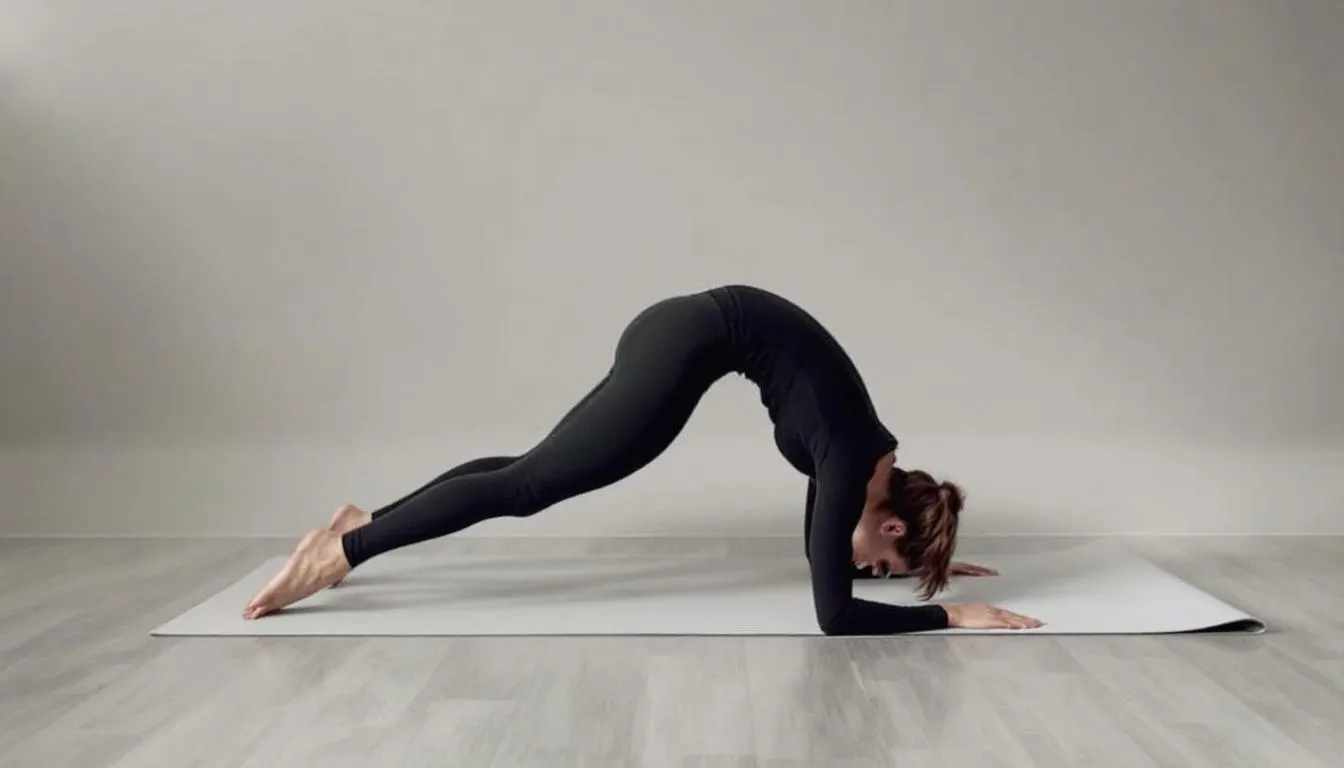
Starting position: Begin in forearm plank with elbows under shoulders, core engaged, and body in a straight line from head to heels.
Execution: Press through your forearms to lift your hips up and back into a modified downward facing dog position (dolphin), then control the movement back to forearm plank. This dynamic transition challenges your entire core while building shoulder stability.
Movement quality: Keep your core engaged throughout both positions. The transition should be smooth and controlled, not momentum-driven.
Safety note: If you feel strain in your lower back, reduce the range of motion or return to static holds in each position.
Progression: Add leg lifts in the plank position, or increase the tempo of transitions.
Bear Plank with Donkey Kicks – Hovering and Leg Lifts
Starting position: Begin in a quadruped position (hands and knees), then lift your knees just a few inches off the floor while keeping your back flat.
Execution: While maintaining this hover position, lift your right leg behind you with control, keeping your knee bent. Lower back to hover and repeat with your left leg. Your core must work intensely to prevent rotation or extension through your spine.
Core challenge: This exercise demands tremendous strength from your deep stabilizing muscles as they work to maintain neutral alignment while your base of support changes.
Regression: Start with static bear plank holds before adding the leg movements.
Progression: Straighten the lifting leg, add opposite arm reaches, or increase the tempo.
Crisscross – Rotating Upper Body with Leg Extensions
Starting position: Lie on your back with hands behind your head, elbows wide, and both knees pulled toward your chest.
Execution: Lift your head and shoulders, rotating your right shoulder toward your left knee while extending your right leg straight. Switch sides in a controlled manner, bringing your left shoulder toward your right knee while your left leg extends.
Rotation focus: The movement should come from your obliques and core, not from pulling on your neck. Keep your extended leg low to increase the challenge.
Breathing: Exhale as you rotate toward each side, maintaining steady rhythm.
Progression: Hold each rotation for 2-3 seconds, or pulse twice in the rotated position before switching.
Swimming Preparation (Bird Dog) – Opposite Arm and Leg Reaches
Starting position: Begin in quadruped position with hands under shoulders and knees under hips, maintaining neutral spine.
Execution: Simultaneously extend your right arm forward and your left leg back, creating a straight line from fingertips to toes. Hold for 2-3 seconds, then return to starting position and repeat with your opposite arm and leg.
Stability challenge: Your core muscles must prevent rotation, extension, or side-bending while maintaining perfect alignment. Focus on reaching long through both your extended limbs.
Progression: Add small pulses in the extended position, increase hold times, or perform the movement from forearm plank position.
Breathing: Exhale as you extend, inhale as you return to center.
Pilates Moves for Improved Balance
One of the standout benefits Pilates offers is improved balance, thanks to its emphasis on core engagement and mindful movement. Many Pilates exercises are designed to challenge your stability, requiring your core muscles to work in harmony with your upper body and legs. Moves like the single leg stretch, side plank, and bird dog are excellent for training your body to maintain balance, even as your base of support shifts.
For example, the bird dog exercise involves extending your opposite arm and leg while keeping your core engaged, which not only strengthens your deep stabilizing muscles but also enhances your overall body awareness. The forearm plank and glute bridge further support balance by building strength in your upper body and lower body, creating a solid foundation for all types of movement.
By regularly incorporating these Pilates exercises into your routine, you’ll develop better balance, reduce your risk of falls, and improve your coordination. Whether you’re an athlete or simply want to move more confidently in daily life, Pilates moves are a powerful tool for building stability from the inside out.
Proper Form and Safety Guidelines
Maintaining proper form is essential for maximizing benefits and preventing injury during pilates core exercises. These guidelines will help you exercise safely and effectively, whether you’re practicing at home or in a studio class.
Maintain Neutral Spine Alignment Throughout All Exercises Your neutral pelvis position should be maintained during every movement. Imagine a straight line connecting your pubic bone and hip bones—this alignment prevents excessive stress on your lower back and ensures optimal core muscle activation. If you notice your back arching during leg movements, reduce your range of motion or modify the exercise.
Keep Shoulders Away From Ears and Neck Relaxed Tension in your neck and shoulders can detract from core engagement and lead to discomfort. Keep your shoulder blades drawn down your back, creating space between your ears and shoulders. When performing exercises with your head lifted, support comes from your abdominal muscles, not your neck muscles.
Engage Core Before Initiating Movement Every pilates exercise begins with core engagement. Before moving any limb, establish your connection to your deep abdominals and pelvic floor. This preparation creates a stable platform from which to move safely and effectively.
Move Slowly With Control Rather Than Using Momentum Pilates emphasizes quality over quantity. Slow, controlled movements challenge your muscles more effectively than fast, ballistic motions. If you find yourself using momentum, reduce your speed and focus on muscular control throughout the entire range of motion.
Stop if Abdominals Dome Outward or Experience Back Pain Abdominal doming (when your belly pushes outward during exercise) indicates that the exercise is too challenging for your current strength level. Similarly, back pain suggests compromised form or inappropriate exercise selection. Modify or stop the exercise and consider consulting a pilates instructor for guidance.
Quality Over Quantity in Repetitions Five perfect repetitions are more valuable than twenty sloppy ones. Focus on executing each movement with precision, proper breathing, and complete muscle control. As your strength improves, you can gradually increase repetitions while maintaining perfect form.
Creating Your Pilates Core Routine
Developing a structured routine helps you progress systematically while ensuring balanced development of your core strength. These sample routines can be adapted based on your fitness level and available time.
Sample Beginner Routine (20 minutes total)
| Exercise | Duration | Rest | Focus |
|---|---|---|---|
| Pilates Breathing | 1 minute | 15 seconds | Establish connection |
| Glute Bridge | 30 seconds | 15 seconds | Posterior chain |
| Single Leg Toe Taps | 30 seconds each leg | 15 seconds | Stability |
| Dead Bug | 30 seconds each side | 15 seconds | Coordination |
| The Hundred (modified) | 30 seconds | 15 seconds | Endurance |
| Side Plank (modified) | 20 seconds each side | 20 seconds | Lateral strength |
Repeat this circuit 2-3 times, focusing on establishing proper form and breathing patterns.
Intermediate Routine (25 minutes total)
| Exercise | Duration | Rest | Progressions |
|---|---|---|---|
| Dynamic breathing | 1 minute | 10 seconds | Add movement |
| Single Leg Stretch | 45 seconds | 10 seconds | Extend further |
| Double Leg Toe Taps | 45 seconds | 10 seconds | Increase range |
| Roll Back with Rotation | 45 seconds | 10 seconds | Hold positions |
| Side Plank (full) | 30 seconds each side | 10 seconds | Add leg lifts |
| Glute Bridge variations | 45 seconds | 10 seconds | Single leg |
| Modified Hundred | 45 seconds | 15 seconds | Legs extended |
| Bear Plank hold | 30 seconds | 20 seconds | Static hold |
Advanced Routine (30 minutes total)
Perform each exercise for 1 minute with minimal rest between movements:
- Dynamic warm-up breathing (1 minute)
- Forearm Plank to Dolphin (1 minute)
- Crisscross (1 minute)
- Bear Plank with Donkey Kicks (1 minute)
- Swimming Preparation (1 minute)
- Advanced Single Leg Stretch (1 minute)
- Full Hundred (1 minute)
- Advanced Side Plank variations (1 minute each side)
- Complex Roll Back patterns (1 minute)
- Integration movements (1 minute)
Frequency Recommendations for Optimal Results Practice pilates core exercises 3-4 times per week for optimal strength gains and movement pattern development. This frequency allows adequate recovery time while maintaining consistent stimulus for adaptation. On off days, consider gentle stretching or walking to support recovery.
Progression Timeline: 8-12 Weeks to Advance Levels
- Weeks 1-3: Master foundational exercises with perfect form
- Weeks 4-6: Add intermediate challenges while maintaining quality
- Weeks 7-9: Increase duration and add complex movement patterns
- Weeks 10-12: Integrate advanced exercises and create flowing sequences
Combining with Other Forms of Exercise Pilates core training complements other activities beautifully. Perform pilates exercises before strength training as activation and preparation, or use them after cardio as recovery and stabilization work. The improved core strength will enhance performance in running, weight lifting, yoga, and sports activities.
Pilates for Specific Goals
Pilates is a versatile form of exercise that can be tailored to help you achieve a wide range of fitness goals. If your primary aim is to build core strength, you can focus on classic Pilates exercises like the hundred, teaser, and plank, which are designed to target and challenge your core muscles. For those seeking greater flexibility, moves such as the shoulder bridge, hamstring stretch, and side bends can help lengthen and release tight muscles.
No matter your fitness level or objective, Pilates can be adapted to suit your needs. Working with a knowledgeable Pilates instructor allows you to create a personalized routine that addresses your unique goals, whether that’s improving body health, increasing strength, or enhancing mobility. The beauty of Pilates is that it meets you where you are—offering modifications for beginners and advanced variations for those ready to progress.
By setting clear intentions and choosing exercises that align with your goals, you’ll get the most out of your Pilates practice and see meaningful improvements in your overall fitness and well-being.
Staying Motivated and Consistent
Consistency is key when it comes to building core strength and reaping the full benefits of Pilates. To stay motivated, set specific, achievable goals and track your progress—whether it’s mastering a new exercise, increasing your endurance, or noticing improvements in your posture. Mixing up your routine with new exercises or variations can keep things fresh and prevent boredom.
Joining a studio class or working with a Pilates instructor can provide valuable accountability and support, helping you stay on track and push through plateaus. The encouragement and feedback you receive in a group or one-on-one setting can make a big difference in maintaining your enthusiasm and commitment.
Remember, building a stronger core and improving your body health is a journey. Listen to your body, allow for rest and recovery, and celebrate your progress along the way. With regular practice and a positive mindset, you’ll continue to see improvements in your strength, flexibility, and overall well-being—making Pilates a rewarding and sustainable part of your fitness routine.
Common Mistakes and How to Avoid Them
Recognizing and correcting common errors will accelerate your progress while reducing injury risk. These mistakes occur frequently, even among regular practitioners, so maintaining awareness is crucial for continued improvement.
Holding Breath During Exercises Instead of Maintaining Steady Breathing Many people instinctively hold their breath during challenging exercises, which reduces oxygen delivery and increases internal pressure inappropriately. The solution is to practice breathing patterns separately before combining them with movement. Start with simple exercises where you can easily coordinate breath and movement, then progress to more complex patterns.
Overusing Neck Muscles When Lifting Head and Shoulders When performing exercises like the Hundred or Single Leg Stretch, people often pull on their neck or crane their chin forward. Instead, focus on lifting from your abdominal muscles while keeping your chin slightly tucked. Place one hand behind your head for gentle support if needed, but avoid pulling with your arms.
Allowing Lower Back to Arch Excessively During Leg Movements Leg movements that cause your back to arch indicate that the exercise is too advanced for your current core strength. Reduce the range of motion by not lowering your legs as far, or bend your knees to decrease the lever arm. Progress gradually as your deeper muscles strengthen.
Rushing Through Movements Without Proper Control The temptation to perform exercises quickly often stems from wanting to “get through” the workout or thinking that faster means more effective. Slow down deliberately and focus on feeling your muscles work throughout the entire range of motion. If you can’t control the movement slowly, you’re not ready for that exercise level.
Gripping or Tensing Unnecessary Muscle Groups Watch for tension in your jaw, shoulders, hands, or hip flexors during exercises. This unnecessary tension wastes energy and can interfere with proper core activation. Periodically scan your body and consciously release areas that don’t need to be working.
Solutions and Corrections for Each Error
- Practice breathing exercises daily, separate from movement
- Use lighter ranges of motion until strength improves
- Focus on one movement quality at a time rather than trying to perfect everything simultaneously
- Record yourself performing exercises to identify patterns you might not feel
- Work with a qualified pilates instructor periodically to receive feedback and corrections
When to Seek Professional Guidance
While these pilates exercises for core strengthening can be safely performed at home, certain situations warrant professional supervision to ensure safety and maximize effectiveness.
Situations Requiring Instructor Supervision Pregnancy and postpartum periods require specialized modifications to accommodate changing body mechanics and address specific needs like diastasis recti (abdominal separation) or pelvic floor dysfunction. A qualified prenatal pilates instructor can adapt exercises appropriately while avoiding contraindicated movements.
Back injuries, herniated discs, or chronic pain conditions need professional assessment before beginning any exercise program. Physical therapists or pilates instructors with medical training can design appropriate progressions that support healing rather than exacerbating problems.
Osteoporosis or bone density concerns require exercise modifications to avoid spinal flexion movements that could increase fracture risk. Professional guidance ensures safe movement selection while still providing strengthening benefits.
Benefits of Studio Classes Versus Home Practice Studio classes provide hands-on corrections, personalized modifications, and accountability that accelerate learning. The use of specialized equipment like reformers, chairs, and barrels offers variable resistance and support that can enhance exercise effectiveness. Group energy and instructor expertise often motivate consistency better than solo practice.
However, home practice offers convenience, cost-effectiveness, and the ability to progress at your own pace. Many people find success combining both approaches—taking periodic classes for instruction and correction while maintaining regular home practice.
How to Find Qualified Pilates Instructors Look for instructors with comprehensive certification from recognized programs (such as Romana’s Pilates, BASI, or Stott Pilates) rather than weekend workshop certificates. Experience with your specific needs (injury, age group, fitness level) is valuable. Ask about their training background and whether they have additional qualifications in physical therapy or corrective exercise.
Importance of Proper Assessment Before Intensive Training A qualified instructor should assess your posture, movement patterns, and any physical limitations before designing your program. This assessment identifies muscle imbalances, movement restrictions, or compensation patterns that need addressing through specific exercise selection and progression.
Professional guidance becomes especially valuable as you advance to more complex movements or if you’re not seeing expected improvements after several weeks of consistent practice. Sometimes small adjustments in technique or exercise selection can dramatically improve results.
The investment in professional instruction, whether through private sessions or quality group classes, often pays dividends in faster progress, injury prevention, and deeper understanding of the pilates method. Even those who primarily practice at home benefit from periodic check-ins with qualified instructors to ensure they’re maintaining good habits and progressing appropriately.
Remember that pilates offers a lifetime of learning and refinement. The principles you develop through these core strengthening exercises will support better movement, reduced pain, and enhanced strength training throughout all your fitness activities. Start with the foundational exercises, focus on quality over quantity, and trust the process—your stronger core and improved whole body health will develop progressively with consistent, mindful practice.